
This course on estate planning and probate examines the law regulating the devolution of property on the owner's death through intestate and testamentary succession (including testamentary trusts) and through will substitutes.
Course Description
Wills, Trusts & Estates examines how the law regulates the transfer of property when the owner of it dies. Our primary task will be to learn the principles of testamentary succession, intestate succession, and will substitutes, including inter vivos and testamentary trusts. We will also examine the professional responsibilities and the administrative obligations of executors and trustees. Finally, we will examine the primary instruments lawyers use to
plan for a client’s incapacity. Our discussion of judicial decisions and hypotheticals in all of these contexts will challenge you to use statutory provisions and case law from various jurisdictions to hone your problem-solving skills. As the greatest emphasis in this course is on the relevant legal doctrine and its underlying public policies, this is an elective that is highly recommended as one prepares to take the bar examination in any jurisdiction.
Instructor
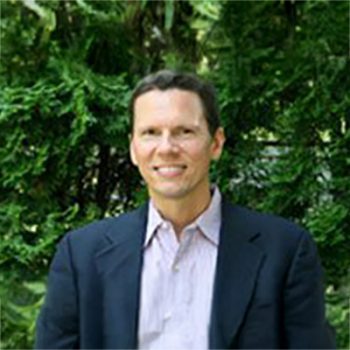
Richard Storrow
Professor of Law
Richard Storrow’s goal for many years was to become a professor of French literature. But his first experience with legal education — reading the New York State Bar Exam to a blind test-taker — changed all that. He has now been a law professor for over 25 years and teaches a broad swath of the curriculum-Lawyering; Law and Family Relations; Property; Wills, Trusts & Estates; Real Estate Transactions and courses in reproductive justice. Professor Storrow joined the CUNY Law faculty in 2008 after serving on the law faculties of Hamline, the University of Illinois, Pennsylvania State, and Texas Wesleyan. He has been recognized as an outstanding teacher on five different occasions.
At Columbia Law School, Professor Storrow was a member of the Columbia Human Rights Law Review and interned for Lambda Legal Defense and Education Fund, the National Commission for Human Rights of Togo, West Africa; Legal Assistance for Seniors in Oakland, California; and the American Civil Liberties Union, where he was a Herbert Rausher Research Fellow. He later continued his work with the ACLU as a member of the board of directors of the ACLU of North Texas. After law school, Professor Storrow clerked for the Honorable Edward J. Parker of the Minnesota Court of Appeals and practiced family law in Minneapolis.
Professor Storrow’s scholarly work brings a human rights and social justice perspective to the burgeoning use of assisted reproductive technology in this country and around the world and has been published in various law reviews and bioethics journals. In 2010 he was named a Fulbright Scholar to Spain where he was a scholar in residence at Barcelona’s Pompeu Fabra University and conducted research on the regulation of assisted reproductive technology in Spain.