
CUNY students accompany CUNY’s Institute on Gender, Law, and Transformative Peace to global convening in Kenya
This past January, the Institute on Gender, Law and Transformative Peace (the Institute) awarded three City University of New York (CUNY) students from Brooklyn College Institute Student Fellowships centered on the intersections of environmental justice, human rights, and gender and racial justice. As part of the fellowship, students traveled with Institute leadership in March 2026 to Nairobi, Kenya, to participate in a transnational convening marking the 20th anniversary of Nobel Peace Laureate Wangari Maathai’s Nobel Peace Prize for her groundbreaking work in ecofeminism and environmental justice.

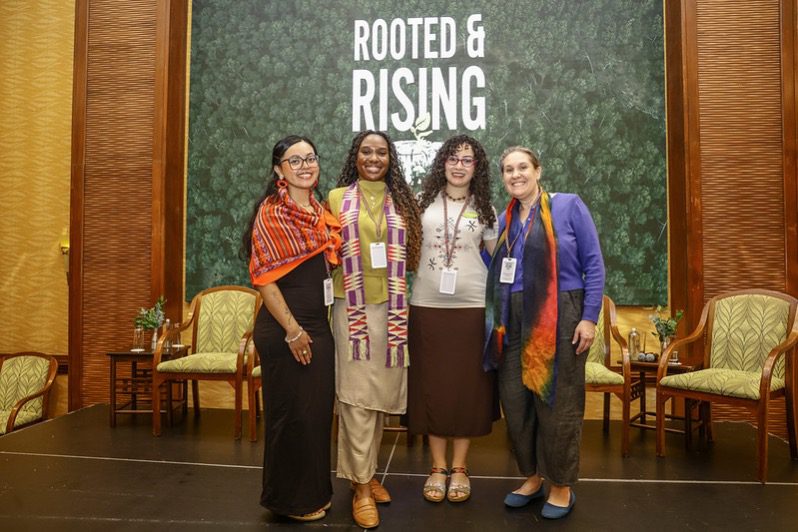
(from left to right): Ms. Wanjira Maathai, executive director of the Wangari Maathai Foundation, Ms. Shirin Ershadi, interpreter, Nobel Peace Laureate Dr. Shirin Ebadi of Iran, Nobel Peace Laureate Ms. Oleksandra Matviichuk of Ukraine, and Institute Executive Director and Nobel Peace Laureate Ms. Leymah Gbowee of Liberia, and Ms. Maria Butler, executive director of the Nobel Women’s Initiative. Photo credit: Nobel Women’s Initiative
The convening brought together activists, scholars, and organizers working across environmental and social justice movements, reflecting the Institute’s role as a global hub for transnational dialogue and movement-building. It also situated students within a framework of environmental and political activism shaped by Ms. Wanjira Maathai, the first African woman to win the Prize on the continent for her work through the Green Belt movement, which linked conservation, women’s rights, and democratic struggle. A leading academic figure as well as political activist and scholar, Ms. Maathai was a prescient changemaker who understood the connections between trees, food security, women’s empowerment, and the deeply political nature of land and seed conservation. Her work anticipated what many movements now take as foundational: that environmental justice is inseparable from questions of power, land, gender, and survival.
Bringing students into these convenings is central to the Institute’s work, linking global movement spaces to hands-on training and development of emerging advocates studying at CUNY.
Through a faculty nomination and application process, CUNY students applied for this year’s fellowship and were selected from a competitive pool. Institute Student Fellows included undergraduates Karina Fernandez-Saito ’26, majoring in Ethics/Cognitive Science; and Lina Mazioui ’27, majoring in history; and master’s student Arielsela Holdbrook-Smith ’26, whose work focuses on performance and interactive media arts.
(from left to right): Institute Student Fellows Karina Fernandez-Saito ’26, Arielsela Holdbrook-Smith ’26, and Lina Mazioui ’27 with Institute Managing Director Dr. Mikaela Luttrell-Rowland. Photo credit: Nobel Women’s Initiative
To prepare for the convening, the students participated in a series of curated learning sessions designed and led by the Institute, focusing on participatory documentation, ethical engagement with activists, and eco-feminist activism happening in the Global South. Participatory action research, legal mobilization, and movement support are central to the Institute’s global gender and racial justice work. Providing training and hands-on experience in these areas is a central aspect of the fellowship. Learning sessions provided students with a political ecology framework through which to orient to the work, advancing the understanding of environmental issues not as abstract commitments, but rather as lived in bodies and experienced differently by those around the world based on social and economic positions and geographic location.
The fellowship culminated in the transnational forum, “Rooted and Rising,” a multi-day convening featuring climate and peace activists from over 25 countries, all working on climate justice in their own contexts. Among them were activists from regions around the world that are disproportionately affected by climate crises and conflict. Together, they shared their experiences and expertise in navigating the complexities of climate work in today’s world and reflected on the gendered and racialized impacts of environmental degradation.
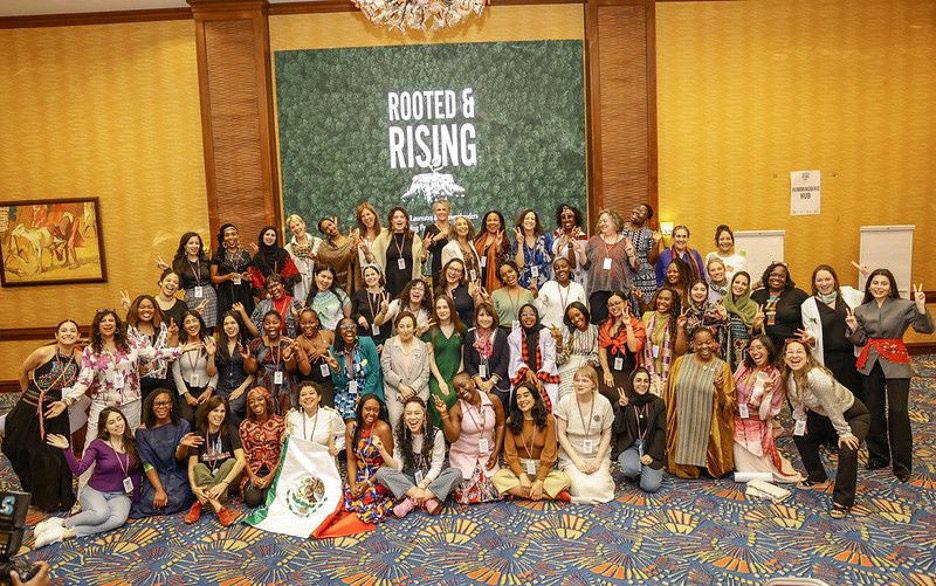
Rooted and Rising convening, Nairobi Kenya, March 2026. Photo credit: Nobel Women’s Initiative.
Institute Executive Director and Nobel Peace Laureate Leymah Gbowee sparked the idea for the dynamic gathering, which was hosted by Nobel Women’s Initiative in collaboration with Wangari Maathai Foundation, the Green Belt Movement, and the Institute on Gender, Law, and Transformative Peace. Ms. Gbowee delivered keynote panel discussions and hosted smaller plenaries with Nobel Laureates Dr. Shirin Ebadi from Iran and Ms. Oleksandra Matviichuk from Ukraine.
Participants joined Wangari Maathai’s daughter, Wanjira Maathai, who serves as executive director of the Wangari Maathai Foundation, on a visit to Karura Forest, where they planted trees, met with community members, and learned about their work. Karura Forest, one of the world’s largest forests fully within city limits, holds additional significance as the place where Professor Maathai was beaten while attempting to stop illegal construction by government officials and private developers more than 20 years ago. Today, the forest continues to face attack even while environmental activism remains strong.
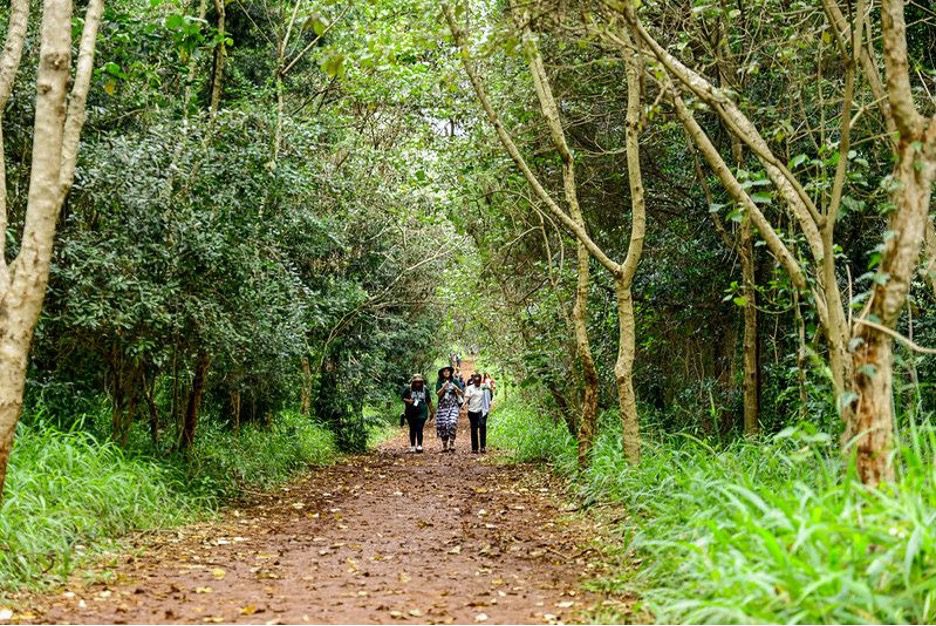
Rooted and Rising delegation members visiting the Karura Forest. Photo credit: Nobel Women’s Initiative.
For the students, the fellowship opened new doors. Institute Student Fellow Arielsela Holdbrook-Smith joined the fellowship program not knowing what to expect. A seasoned global health professional whose work bridges environment, community-based practice, and cultural work, she has spent years in New York City collaborating with grassroots organizers, elected officials, academic institutions, and community boards to address community health needs through community-led, systems-based approaches. She is currently pursuing a Master of Fine Arts in Performance and Interactive Media Arts at Brooklyn College, exploring ways to leverage media and arts as public health tools. She reflected: “The experience of being amongst Nobel Laureates and peers from across the globe—social change agents in their own regions—was extremely powerful and moving. Joining the group of young leaders in mobilizing amongst ourselves and building communities of care and tangible support was the ultimate lesson in coalition-building, one that I plan to apply to my current work in community engagement and take with me into the future.”
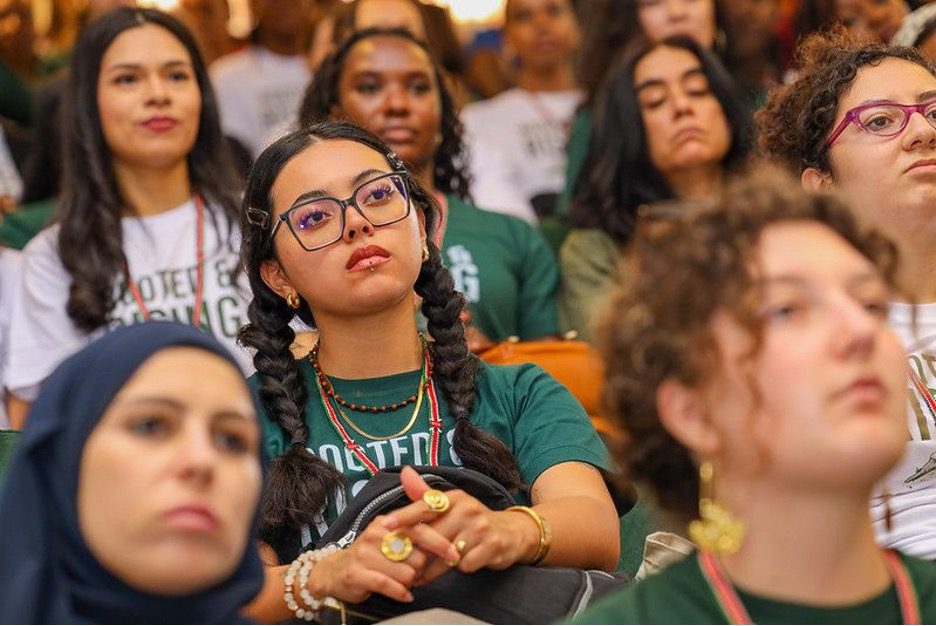
Institute Student Fellow Karina Fernandez-Saito ’26 listening to community members on the visit to Karura Forest. Photo credit Nobel Women’s Initiative.
Institute Student Fellow Karina Fernandez-Saito believes the fellowship broadened her horizons for understanding global justice issues: “I had initially thought I knew what to expect from the convening,” she shared. “However, once I met the many feminist activists, my whole world changed. Sitting in a room with such astonishing, strong women sharing their personal stories has been much more empowering than reading secondary sources. I realized my privilege and what I can do to honor the women who have fought and continue to fight for environmental justice and women’s rights. The fellowship did more than educate me, it instilled in me a sense of accountability and a responsibility to turn inspiration into action—including through my research into the disproportionate impact of caregiving responsibilities on Latina women.”
Institute Student Fellow Lina Mazioui brought to the fellowship a special interest in environmental justice and law and a research background in oral history, drawing on her recent work with local community groups on New York City water conservation. She shared: “My experience as an Institute Student Fellow was truly like no other—a once-in-a-lifetime experience for young women to be truly inspired by other women in positions of leadership. Being a Fellow enhanced my teamwork and collaboration skills and expanded my cultural horizons.”
The mission of the Institute on Gender, Law, and Transformative Peace is to serve as a dynamic hub for cross-sectoral, cross-movement, and transnational organizing, research, and scholarship. Through this fellowship, students were introduced to the Institute’s political ecology framework and orientation to transnational solidarity. They left with new networks of colleagues around the world advancing environmental justice work, and a deeper understanding of the interconnected nature of that work.